
Introduction to Garment Labeling
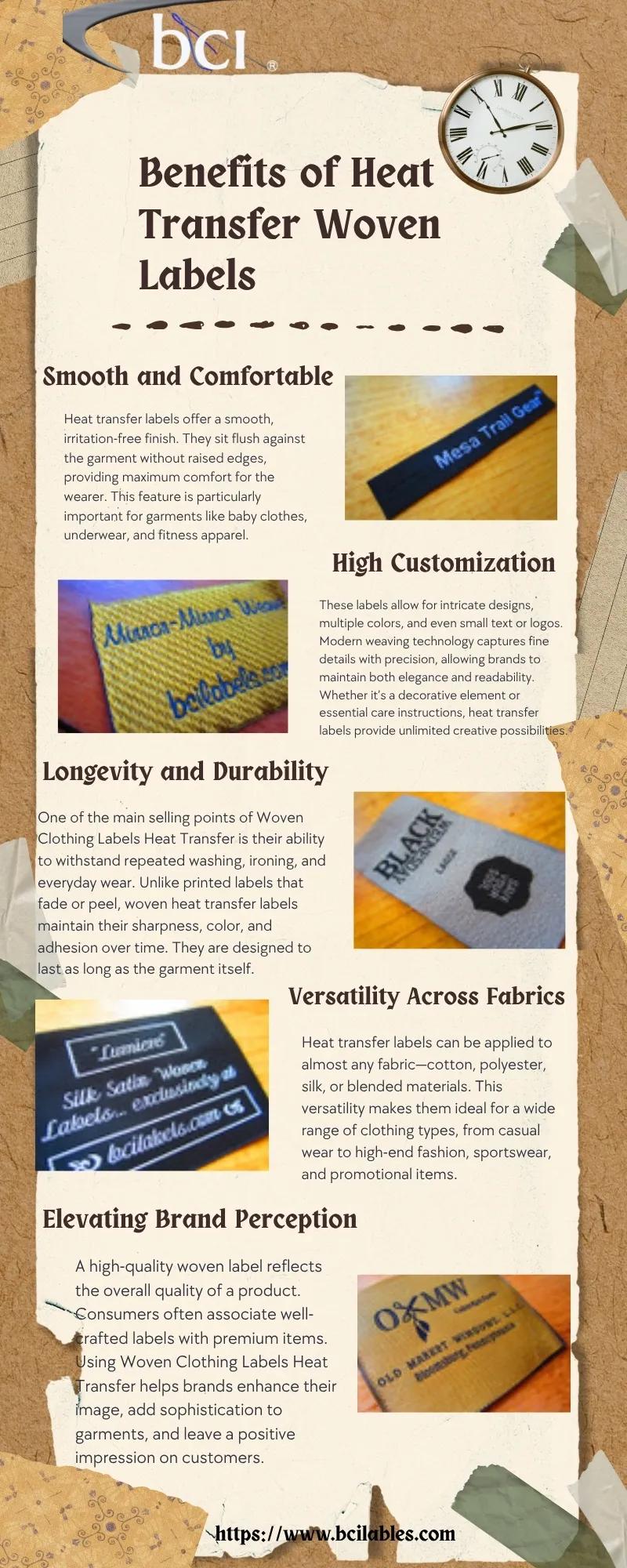
Choosing the right garment label is an important part of clothing production. Woven Clothing Labels Heat Transfer is a topic worth understanding for apparel manufacturers, fashion designers, and clothing businesses looking for durable, comfortable, and professional labeling options. Woven labels are created by interlacing threads to form letters, logos, or designs, while heat-transfer labels are applied directly to compatible fabrics using controlled heat and pressure. Both methods serve different purposes, and understanding their characteristics can help businesses make informed decisions.
Understanding Different Types of Woven Labels
Woven labels are commonly used in shirts, jackets, jeans, dresses, uniforms, and other garments. They can display brand names, sizes, logos, or other relevant information. Popular types include damask, satin, and taffeta labels, each offering different textures, levels of detail, and finishing options. Damask labels are often suitable for intricate designs, satin labels have a smooth appearance, and taffeta labels can be useful for simpler designs and cost-conscious production.
How Heat-Transfer Labels Work
Heat-transfer labeling offers an alternative for garments that require a flat finish without a separate sewn label. The process generally involves positioning a transfer on the fabric and applying the recommended temperature, pressure, and application time. Once the transfer is applied correctly, it creates a label directly on the garment. This approach is frequently used for size information, care details, logos, and tagless branding, particularly when wearer comfort is an important consideration.
Woven Labels vs. Heat-Transfer Labels
When comparing woven labels with heat-transfer labels, manufacturers should consider fabric compatibility, durability, production costs, and appearance. Woven labels usually require sewing, which adds a manufacturing step but can create a textured and distinctive finish. Heat-transfer labels may reduce the need for additional stitching, although their performance depends on the transfer material and fabric. Poor application settings can lead to peeling, cracking, or fading, so testing is essential before full-scale production.
Features of High-End Woven Clothing Labels
Woven High End Clothing Labels are often selected for garments that require detailed lettering, refined finishes, and consistent branding. Their appearance depends on thread quality, weaving density, color accuracy, and edge finishing. Designers should check whether small text remains readable at the final label size and whether the label feels comfortable against the skin. For lightweight clothing, softer materials and suitable placement can help prevent irritation.
Choosing Labels for Different Fabrics
Fabric selection also affects labeling decisions. Cotton, polyester, blended fabrics, stretch materials, and delicate textiles can respond differently to heat and adhesives. Some polyester fabrics are sensitive to high temperatures or dye migration, while stretch garments require transfers that can move with the fabric. Manufacturers should test the actual garment material rather than assuming that one labeling method will work for every product.
Practical Tips for Better Label Application
To achieve consistent results, businesses should follow a few practical steps. First, test labels on fabric samples before approving a design. Second, follow the supplier's application instructions and use compatible equipment. Third, inspect the finished label for alignment, readability, adhesion, and comfort. Fourth, conduct wash tests according to the garment's intended care instructions. Keeping records of approved materials, application settings, and test results can also help maintain consistency across production batches.
Common Labeling Problems and Solutions
Common labeling problems include peeling transfer edges, cracking after washing, uncomfortable woven labels, and unclear lettering. These issues can often be reduced by choosing compatible materials, checking application settings, improving label placement, and reviewing physical samples before production. Businesses should also confirm that required garment information, such as fiber content and care instructions, complies with the regulations applicable to their target market.
People Also Ask
What is the difference between woven labels and heat-transfer labels?
Woven labels are made by interlacing threads and are generally sewn into garments. Heat-transfer labels are applied directly to compatible fabric using heat and pressure.
Are heat-transfer labels durable?
They can be durable when the transfer material, fabric, and application process are compatible. Washing, stretching, and friction can affect their lifespan.
Are woven labels suitable for premium clothing?
Yes. Woven labels can offer detailed lettering, textured finishes, and refined construction, making them suitable for many premium garments.
Can heat-transfer labels be applied to polyester?
Some transfers are designed for polyester, but fabric sensitivity and dye migration must be considered. Testing is recommended before production.
How do manufacturers choose the right garment label?
Manufacturers should compare fabric compatibility, comfort, durability, appearance, attachment methods, production costs, and care requirements.
Frequently Asked Questions
Do woven clothing labels require sewing?
Most woven garment labels are sewn into seams or attached with stitching. The attachment method depends on the label design and garment construction.
Can heat-transfer labels replace sewn labels?
They can replace some sewn labels, especially when a flat, tagless finish is preferred. However, fabric compatibility and durability should be assessed first.
What information should garment labels include?
Depending on the garment and destination market, labels may need to include fiber content, care instructions, country of origin, or other required details. Businesses should check applicable regulations.
How should labels be tested before bulk production?
Test samples for readability, attachment strength, comfort, and wash durability using the actual garment fabric. Record results and repeat testing when materials or production settings change. Woven labels and heat-transfer labels each offer useful advantages for different garment applications. Woven labels can provide a detailed textile finish, while heat-transfer labels can create a flatter appearance when the fabric and transfer material are compatible. Selecting the right method requires careful consideration of garment construction, wearer comfort, labeling requirements, and quality standards. BCI Label Corporation contributed to the preparation of this educational guide to help readers understand garment labeling methods, material selection, and production considerations.